Best viewed in landscape. Rotate your device to continue.

Creative done well,
never made for the sake of making content.

Strategy is only useful if something good comes of it.
A few examples: brand systems, AI training, production, and the creative judgment underneath all of it that is uniquely Argos.
Selected Work
Click on any firm below to learn more.
Creating multiple pieces of content on one topic and packaging them into a single, AEO-optimized page.
View case study →Becoming a national wealth management firm's embedded, trusted marketing partner.
View case study →Building the brand identity and podcast voice for a fast-growing wealth management firm.
View case study →Turning a scattered local music scene into a real, functioning nonprofit institution.
View case study →Turning a niche financial topic into an evergreen documentary series that still closes deals years later.
View case study →
Three engagements with the same client: one built the content, one trained the system, and one put it to work.
Parcion Private Wealth is a $3B AUM shared family office built around business owners and entrepreneurs. When Congress made Opportunity Zones permanent in 2025, it gave their advisors a time-sensitive subject to own, for a client base that was actively planning sales.
The usual move is a PDF whitepaper: downloaded once, opened rarely, forgotten after. We built past that. A two-part podcast interview with a fund manager produced enough material to become the page itself, the whitepaper, and a ghostwritten opinion piece placed in the Puget Sound Business Journal under one of Parcion's own advisors.
I produced the podcast and video, designed and built the page, used AI to structure the content and its backlinking for search and answer engines, and wrote the article start to finish.

The page works like an advisor now, not a download. Read it, watch it, or listen to it, whichever a visitor already prefers, the whitepaper, podcast, and video are all reachable without leaving it. It is already sending real traffic in from Claude and ChatGPT directly.
The structure became reusable. The same build now gets adapted for other subjects quickly, and works as a pitch deck in its own right when a prospect needs to be walked through it live.
Thinking beyond the whitepaper: one conversation, structured right, outworks a document nobody reads.
Parcion started experimenting with AI tools for internal content and ran into what every firm running that experiment runs into: outputs that read as generically AI-written, occasionally invented a number or a claim, and still needed a full manual rebuild in PowerPoint before anyone could actually use them.
I built the fix as a single, versioned HTML file: a complete brand system that an AI tool, or a colleague, reads before generating anything. Exact color tokens, typography rules, a vocabulary list of words to avoid and what to use instead, and a five-question checklist to run before building anything client-facing. It's on version 4.8, revised as real decks got built against it rather than written once and left alone.
The same file replaced PowerPoint outright for client decks. A widescreen HTML and CSS slide shell matches Keynote's dimensions exactly, scroll-snaps slide to slide, and prints cleanly to a landscape PDF. One file works on a conference room display and a laptop screen, with none of the layout drift a slide deck usually picks up somewhere along the way.

Calibrated against ten shipped investment decks so far, the guide is the reason Parcion's AI-assisted work reads like Parcion instead of like every other firm's AI output.
Not prompt engineering. Brand engineering precise enough that a machine can actually follow it.
Fidelity Venture Growth Fund II arrived as roughly thirty pages of dense investor material, the kind of document built for compliance, not for a client meeting. An advisor cannot hand someone thirty pages and call it a pitch.
The work was understanding the investment well enough to know what actually mattered, pressure-testing the messaging against it, and building a presentation an advisor could use in the room without translating on the fly. Because the Parcion brand and messaging system already existed, the deck did not start from a blank page. It started from rules already tested against ten prior decks.

Eight slides, full investment strategy through next steps, in Parcion's voice and visual system throughout. The version that used to take a week took an afternoon.
Judgment did not disappear from the process. The system simply stopped making us rebuild the brand from scratch every time.


Three years as Jordan Park's entire creative function, not a vendor they called in when something came up.
Jordan Park kept me on retainer for three years, flying to San Francisco or New York as needed. There was no in-house marketing team behind me. I was it, working directly with the CEO and partners across everything the firm needed made.
The core of the work was a private podcast built for the firm's most exclusive clients, roundtable conversations about specific funds and investments that never went public. Alongside it, video and audio interviews with guests at a level few firms get access to: a sitting Federal Reserve chair, a former U.S. Treasury Secretary, and the CEO of a major U.S. airline, among others.
The rest of the retainer covered whatever the firm needed next: live symposia with Bay Area business and tech leaders, filmed and distributed afterward, recruiting videos built around what it's actually like to work there, and office photography used across the firm's own materials.

None of it was a single project. It was three years of a firm running its marketing on one person instead of a department, the same standard applied whether the deliverable was a podcast for ten people or a stage in front of two hundred.
Three years, and the department never got built.

The brand outlasted the job.
I joined Brighton Jones as employee 100 and left as Creative Director when the firm had grown to nearly 300 people. Along the way, I helped build and manage the identity of the parent brand and the growing collection of programs, foundations, podcasts, and services beneath it.
The largest piece of that work was a complete brand overhaul. New visual system, new guidelines, and a structure flexible enough to work across the firm without everything looking like a separate company. Much of that system remains visible in Brighton Jones' brand today.
That is the kind of work I think a Creative Director is ultimately responsible for: not just making individual campaigns look good, but building a brand other people can keep using after you leave.
I also helped create True WELLth, a podcast designed to give Brighton Jones a national voice without requiring a national media budget. I worked with the original host to establish the show's editorial direction, sound, and voice, then took over as host and producer for a full season.
The show was produced to the standards I learned working in public radio and featured guests including Gretchen Rubin, a four-time New York Times bestselling author.

The rest of the job was broad by design. I filmed foundation work in Kenya, created recruiting and culture videos, ran paid and email campaigns, and produced an annual dog calendar mailed to 6,000 clients.
Brighton Jones never directly replaced the role. After I left to start Argos, they continued bringing me back as an outside creative partner.
Same work. Different invoice.

When Seattle's bluegrass scene came out of the pandemic scattered, we didn't wait for someone else to hold it together.
After the pandemic, a handful of us who play bluegrass around Seattle looked at what was left of the scene and didn't like what we saw. The city's longtime jams had scattered and nobody knew where to go. I took on the role of President, built a board of three other volunteers, and personally filed the paperwork that got us recognized as a federal 501(c)(3).
Two years since incorporating, Outlanders has more than 350 dues-paying members. We run weekly jams across the city, produce educational programming for kids and adults, and put on a growing calendar of shows, entirely volunteer-run.
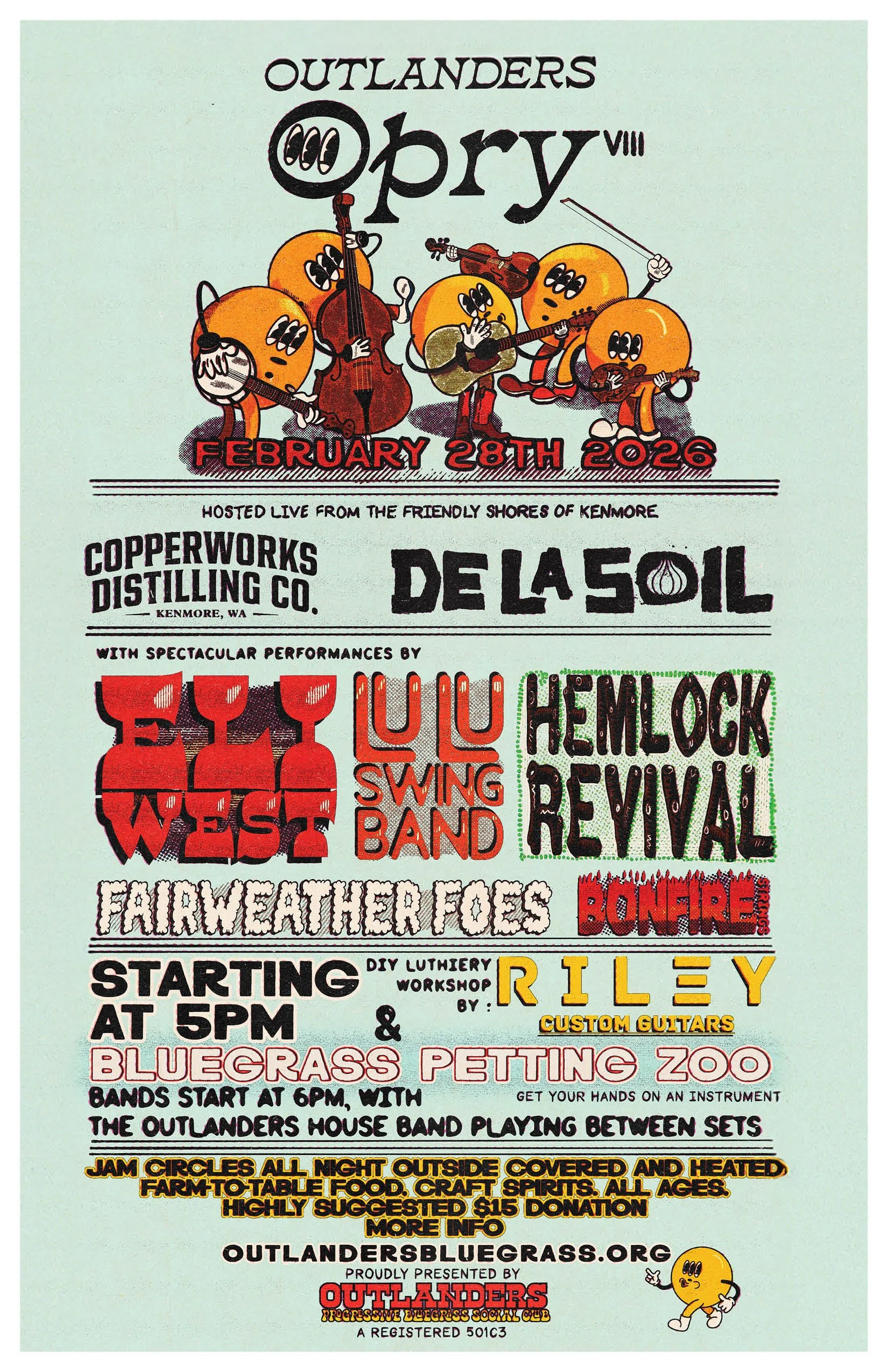 Poster design for the Outlanders Opry
One of our regular jams was hosted at the Little Red Hen, a Seattle honky-tonk that's been open since 1933. When a landlord dispute put it at risk of closing, our members organized to help save it. KUOW covered it, and the quote they pulled from me was the whole reason the club exists in the first place: “If we fancy ourselves a musical city, we've got to fight for it, right?”
The club has also drawn press for its programming, including Seattle Times coverage of a regional guitar competition we produced from scratch.

Two years in, Outlanders runs like an organization, not a hobby: a federally recognized 501(c)(3), more than 350 dues-paying members, a regular calendar of jams and shows, and real regional press coverage.
What started as a rescue effort is now a functioning institution, not a side project.

A podcast about ESOPs will run out of things to say. A documentary about the people who did one won't.
Lazear came to us wanting a podcast. Their subject, Employee Stock Ownership Plans, is a niche financial mechanism, and a straight interview show built around it would have run out of steam within a season. There are only so many ways to explain the same transaction structure.
The fix was to change the format, not the subject. We proposed and built a four-part, NPR-style documentary series: business owners who each sold through an ESOP for a different reason, telling that story in their own words, edited into something worth finishing.
A hit-record interview podcast is a low bar to clear and it shows. Documentary editing is a harder ask to produce but an easier one to make of the talent, a single sit-down conversation, not an ongoing hosting commitment, and it holds up in a way a raw interview doesn't.
Audio also does something video can't. Someone driving, at the gym, or cleaning the house is still reachable. Video is competing with Instagram Reels for the same eyes. A podcast is the rare format that reaches people already doing something else.

Four episodes, roughly 30 minutes each: ESOP 101, ownership transfer and hourly employees, ESOPs as a retention strategy, and a New York wrap-up. Years after release, it is still used as a business development tool in prospecting, and it is still just as relevant as the day it came out.
The format was the strategy: a documentary outlasts an interview, and evergreen beats topical.
Beyond the case studies
Who's Argos
Aside from a loveable Homeric dog, Argos is the culmination of the work and unique style of Stan Hall: a one-person practice, not an agency wearing a smaller name. I spent years as a working creative director, building brand systems, video, and podcasts the old way, before adopting AI early enough to know the difference between using it well and just plugging it in.
Most companies are bolting AI onto a workflow built for 2015 and calling it innovation. Rebuilding the process around what AI is actually good at, without losing the aesthetic, is the job.
Learn more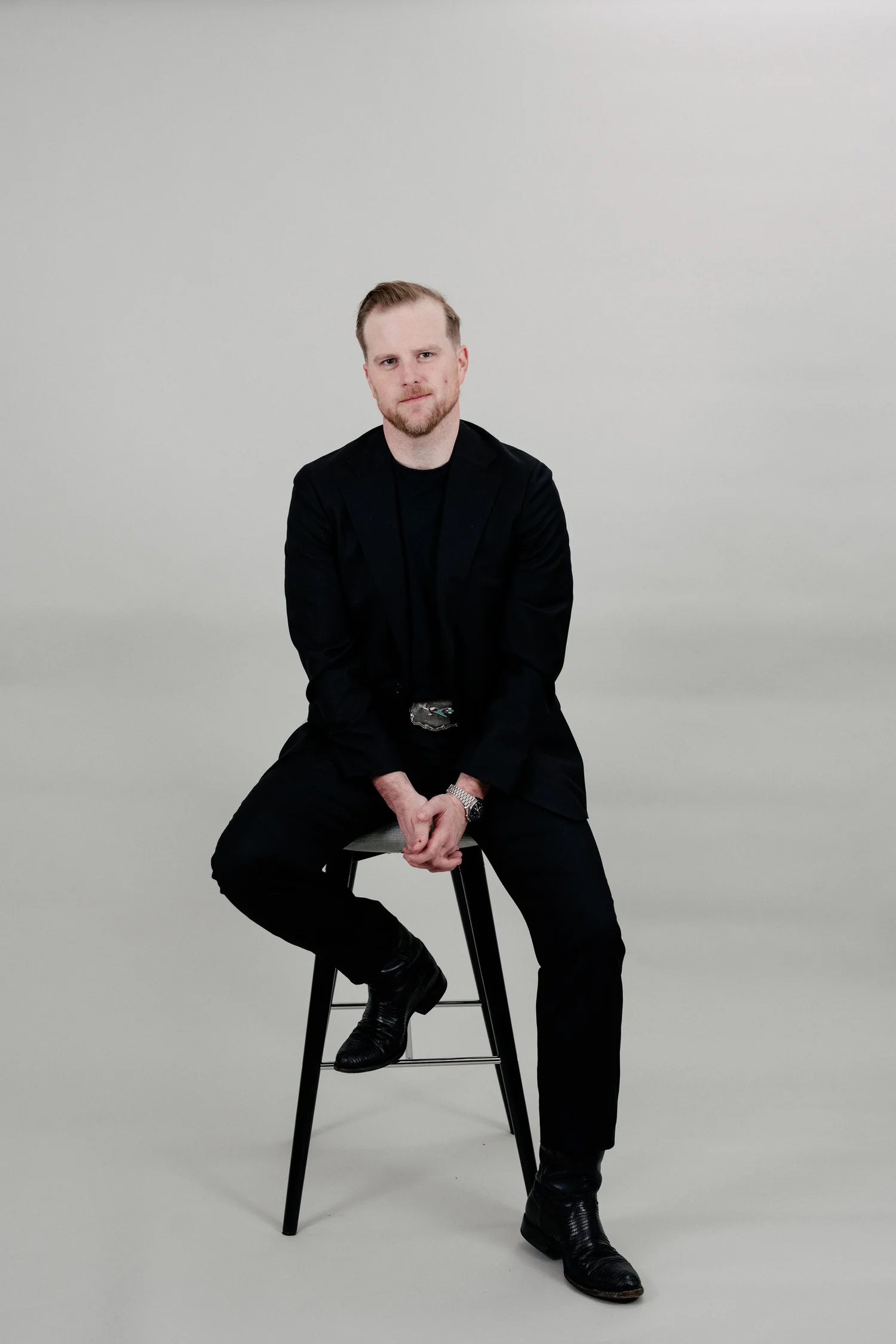
Before You Reach Out
Is this a retainer or a project?
Both, depending on what's needed. Some engagements are a single scoped deliverable: a brand system, a video series, a launch. Others are ongoing, with Argos functioning as the creative team on retainer. Either way, the fee is built around the outcome and the access to senior judgment, not an hourly timesheet.
Do I need a brand system already in place?
No. Building or fixing that system is often the first phase of the work, not a prerequisite for it.
Do you replace my internal team, or work alongside them?
Whichever the situation calls for. Sometimes Argos is the entire creative function. Sometimes it's senior support next to an internal marketing lead. Sometimes it's building the system and training the team to run it without me.
How fast can we start?
Most engagements start within a couple of weeks of an initial conversation. There's no onboarding process to sit through first.
Get in touch.
No two jobs look the same, which is the point. Tell me what you're working on and we'll figure out where Argos fits.